

60 YEARS OF PORSCHE 911
Updated: Dec 10, 2025
“In a world where everything is so eager to be explained, design must speak for itself.”

At the IAA Mobility 2023 in Munich, the Porsche 911 was once again the centre of attention. Chief Designer Michael Mauer has now spent nearly two decades shaping the identity of the sports car brand. In this interview, he reflects on his greatest challenge: carrying the glorious legacy of the 911 into the future — a task that demands exceptional skill and confidence.
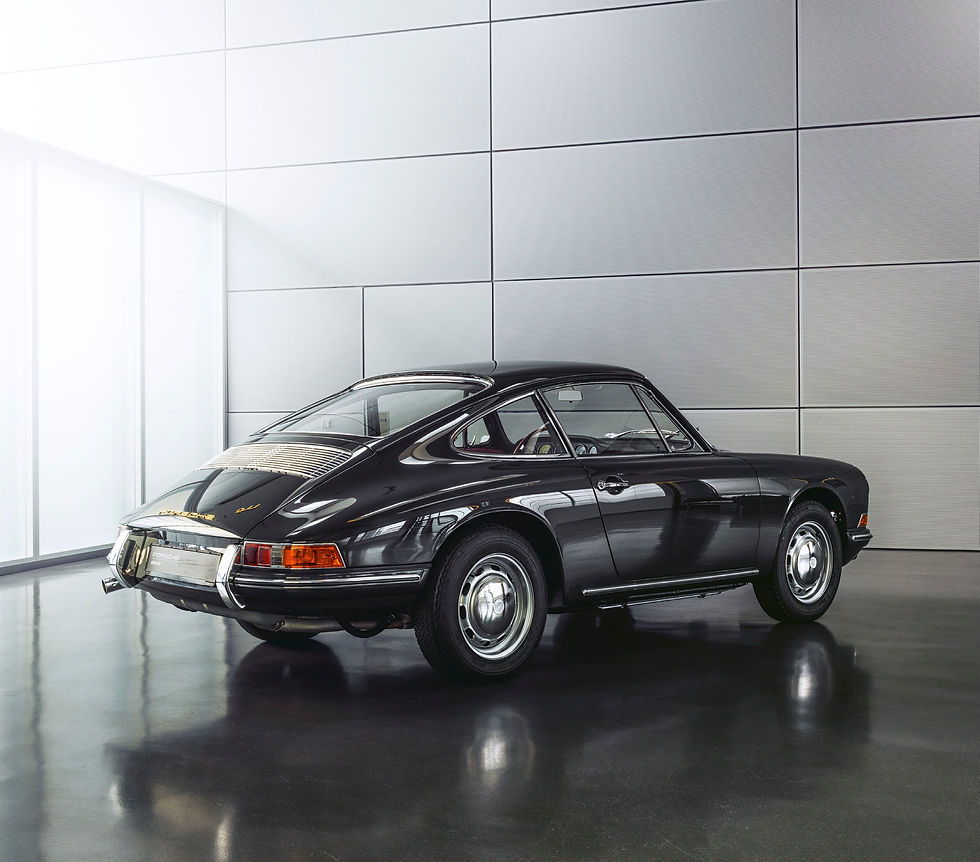
Mr Mauer, when you look at the current 911 in contrast to the first generation, what feeling does that evoke in you?
Michael Mauer: I see a wonderful continuity. The 911 has retained its identity; it was and remains modern in every era. It meets changing aesthetic expectations while staying true to its line. This leap from then to now shows why designers are the custodians of the brand.
Please take a closer look at the first 911 for us.It is the forward-looking interpretation of the sports car. It set a blueprint that essentially cannot be improved. Whenever we try other silhouettes, we ultimately return to that very first roofline. It is simply so distinctive. And this car never appears ostentatious or aggressive, even though it has always been one of the fastest. I find that truly fascinating.
How would you characterise the current eighth generation?
The model is best understood in dialogue with its direct predecessor. The athlete has gained even more muscle, yet it remains restrained compared with the extroverted appearance common in this performance class today. Self-confident, but without arrogance.
Can you describe in one sentence what defines the design of the 911?
I always search for expressions that can definitively describe a Porsche. I have found a phrase that I consider wonderful: crafted precision.
If the 911 were a person, what would its personality be?Someone who does not push himself into the foreground, yet someone everyone knows is capable of extraordinary things. As an athlete, he would be a triathlete – lean, focused and accomplished in several disciplines. He would be someone I would gladly ask for advice, because he would support and inspire me. Ferdinand Alexander Porsche, who designed the first 911, was a free spirit. He gave the car this self-confidence and established its personality.
Are there days in your creative life when you do not think about the 911?Yes, those days exist. But that doesn’t worry me – on the contrary. With growing experience, I feel that the solution is already there; I simply cannot see it yet.
Your challenge as a designer?
For us, it is always about creating a desirable design. In the design world, this is the highest good – almost art. But for a product, that alone would not be enough for me. For me, it is about creating a desirable design that also strengthens the brand and positions it correctly. It must visualise all its values. Only then does design become the supreme discipline.

Porsche is a strong brand, and the 911 a strong model. Is there a sense of rivalry?
Having an icon in the product range is incredibly helpful. A model that shapes the brand over a long period of time, unique and instantly recognisable. You can derive the design philosophy of the entire brand from an icon. For me, the 911 is the fixed star of the whole Porsche universe.
In a world where everything is so readily explained, design must explain itself.Michael Mauer
You often speak of your “creative muscle”, yet you have defined clear criteria for the design process at Porsche. How do these fit together?
They sound contradictory.A designer always faces the challenge of having to justify decisions rationally. But much of what we do is intuition – pure gut feeling. And billions in investment depend on that. Engine developers have measurable test-bench data. So I looked for something that could frame our intuition and, in a way, make it measurable.
This led to your own Porsche design language.

What does it look like?
From the twelve classic archetypes of psychology, we selected three that suit us: the hero, the creator and the rebel. We assign faces to these archetypes. We chose James Dean, Ferdinand Porsche and Steve McQueen. With this personification, the mind starts to visualise. We can imagine the direction in which the design must move in order to correspond with these protagonists. The most difficult part follows: assigning key concepts to the faces. They help us translate ideas into concrete design. We chose tension, purpose and focus. Focus is the hero, purpose the creator, tension the rebel.
Does this philosophy extend beyond design?
These three concepts reflect our values and therefore also inspire internal processes within the company. Suddenly, everyone has images in mind that provide direction. For me, design is far more than shaping forms; it is about shaping a brand. For that, we need consistency. From that, identity emerges.
One of your personal favourite design terms is “flow of energy”. What do you mean by that?
Everything that creates tension. The interior, for example, consists of tactile, digital and analogue elements – stimulating contrasts. In the exterior, our surfaces create tension. For me, they are high-voltage surfaces. You only need to run your fingers across the 911 to feel it.
How do you interpret timelessness?The term guides me. It reflects what Porsche has stood for over many years – and what we want to carry into the future. To make something desirable, it must be aesthetically appealing and emotionally moving. In a world keen on explanations, design must be self-explanatory.
Was it difficult for you to design your first 911?
I was relieved that my first project was not immediately the next generation of the 911. It gave me time to understand what defines a Porsche. You need a certain confidence. With the 911, it is not ten people within the company giving input, but a hundred. It is never just about whether the car is beautiful; it is always about whether it is still a 911. There is an awareness that the 911 carries great responsibility. It is the patriarch of the Porsche family.
How do you handle that responsibility?
Mauer: At first, we pretend the new 911 is just another project. As designers, we cannot feel restricted from the outset. We need deliberate provocations to move forward. But when it comes to shaping the car, you start asking yourself: how far can I go? Or: shouldn’t we go even further?
How far ahead do you think when envisioning the 911?In our future lab, we are working on the project “911 – Model Year 2050”. We take a huge leap, consciously skipping three generations. We cannot know what drivetrain the 911 will have then.
But it is more than a thought experiment – it actively enriches current processes. We move mentally far ahead, then work our way back into the past, for example to 2030. This creates new images, new perspectives, new social frameworks that would never emerge from a purely evolutionary approach.
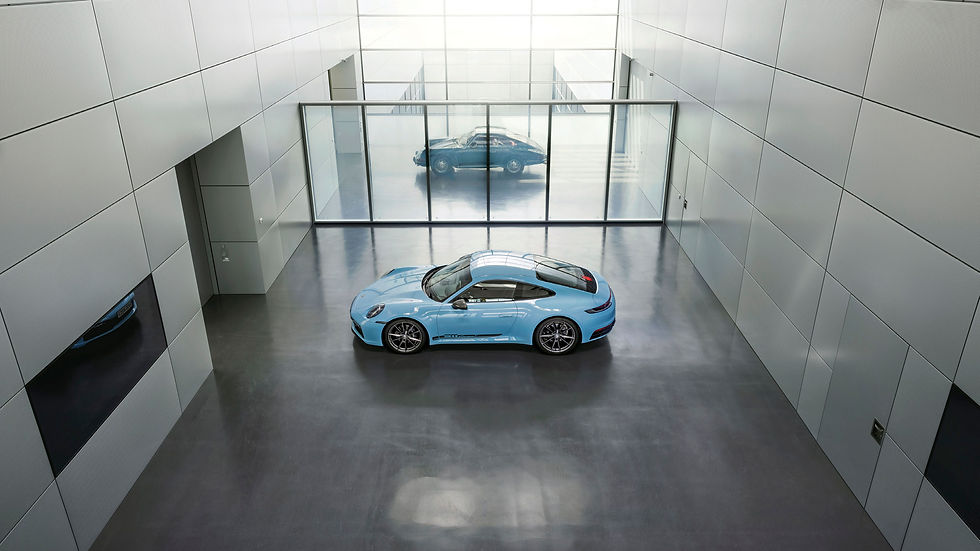
What will the next Porsche 911 look like?
Like a 911. Even if certain elements of the design language evolve, it will be instantly recognisable as a 911 – and at the same time unmistakably a new Porsche 911.


Comments